Showing posts with label fish tank stand. Show all posts
Showing posts with label fish tank stand. Show all posts
Saturday, October 29, 2011
Skipton's 180 gallon aquarium cabinet
Finally! A post about the 180 gallon aquarium stand I made for Skipton's Unique Aquaria in Boston. I have posted previously about this cabinet, but until now I haven't had the chance to take decent pictures of it in the store. So here they are!
At the time, this cabinet was the best I'd ever made, from the design to the fit to the finish. It also taught me a lesson about materials and larger tanks:


Saturday, May 14, 2011
Using Dye in Furniture Design
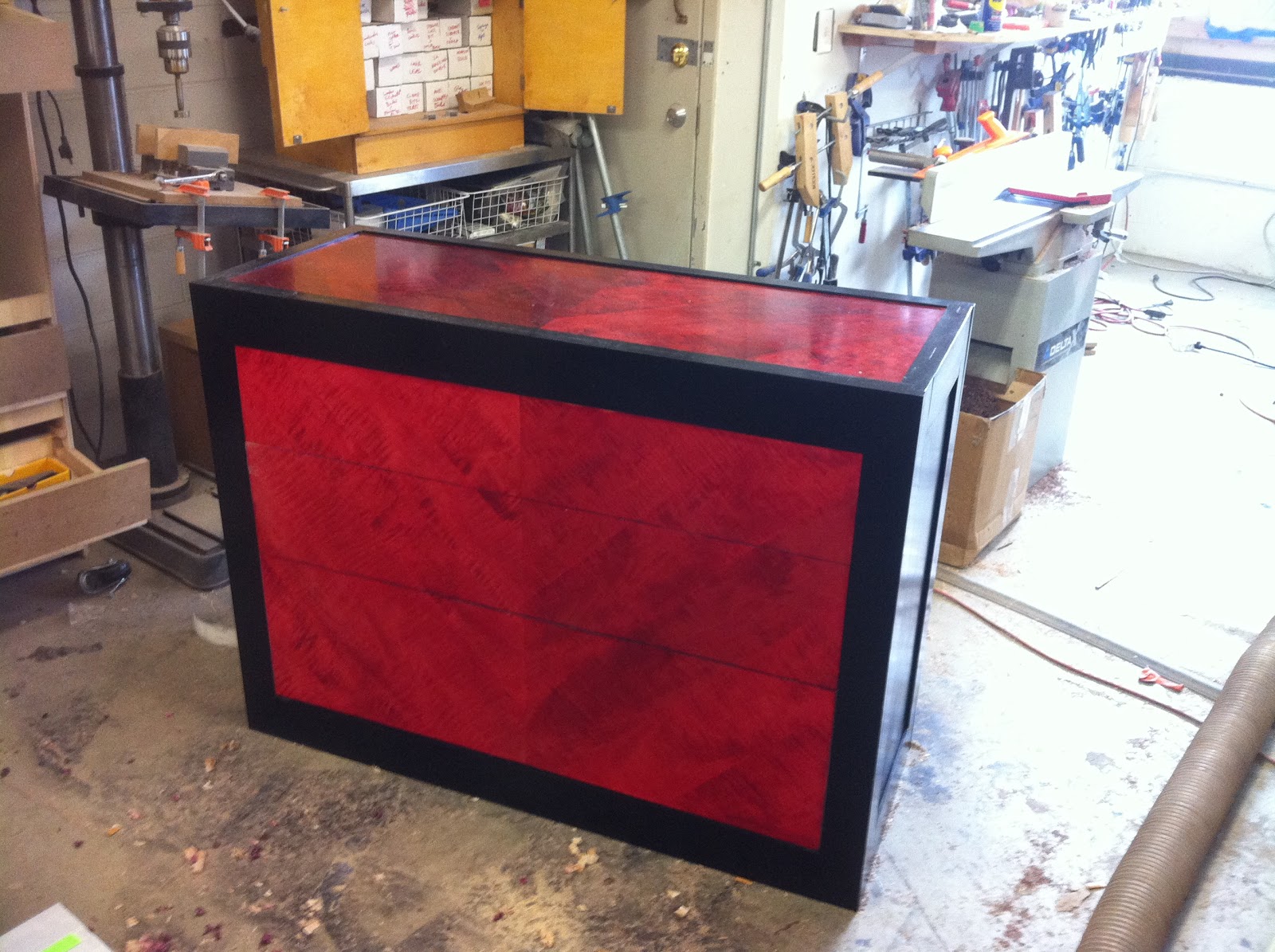 |
| A dyed chest. All it needs are feet and drawer pulls and I'm done! |
I still don't use stains, but I've changed my mind about dyes. Unlike stains, dyes penetrate the wood fibers rather than pack the pores with pigment. Dyes highlight the natural figure and chatoyancy in wood, and range in color from subtle browns and yellows, to intense reds, blues, and greens. Dyes are often used with highly figured, light-colored woods, most notably curly maple.
Thursday, April 14, 2011
Frame and Panel Case Tips: Rattle-Free Panels

- The grooves in the frame parts (rails and stiles) should be centered on the edge of the frame parts, and at least 1/4" from the edge.
- The depth of the frame grooves should be no deeper than the distance of the groove from the edges of the frame part. This ensures the frame is strong enough stand up to use and abuse.
- The tongues of the panel should not reach all the way to the bottoms of the grooves in the frame parts. This allows for side-to-side expansion of the panel and the frame. If the panel DOES touch the bottoms of the grooves, any expansion of the parts will result in warping of the assembly.
- If using a solid-wood panel, the grooves in the frame should be slightly wider than the tongue on the panel. This lets the panel get thicker (due to seasonal movement), without splitting the frame parts.
- Don't glue the panel into the frame!
Subscribe to:
Posts (Atom)